
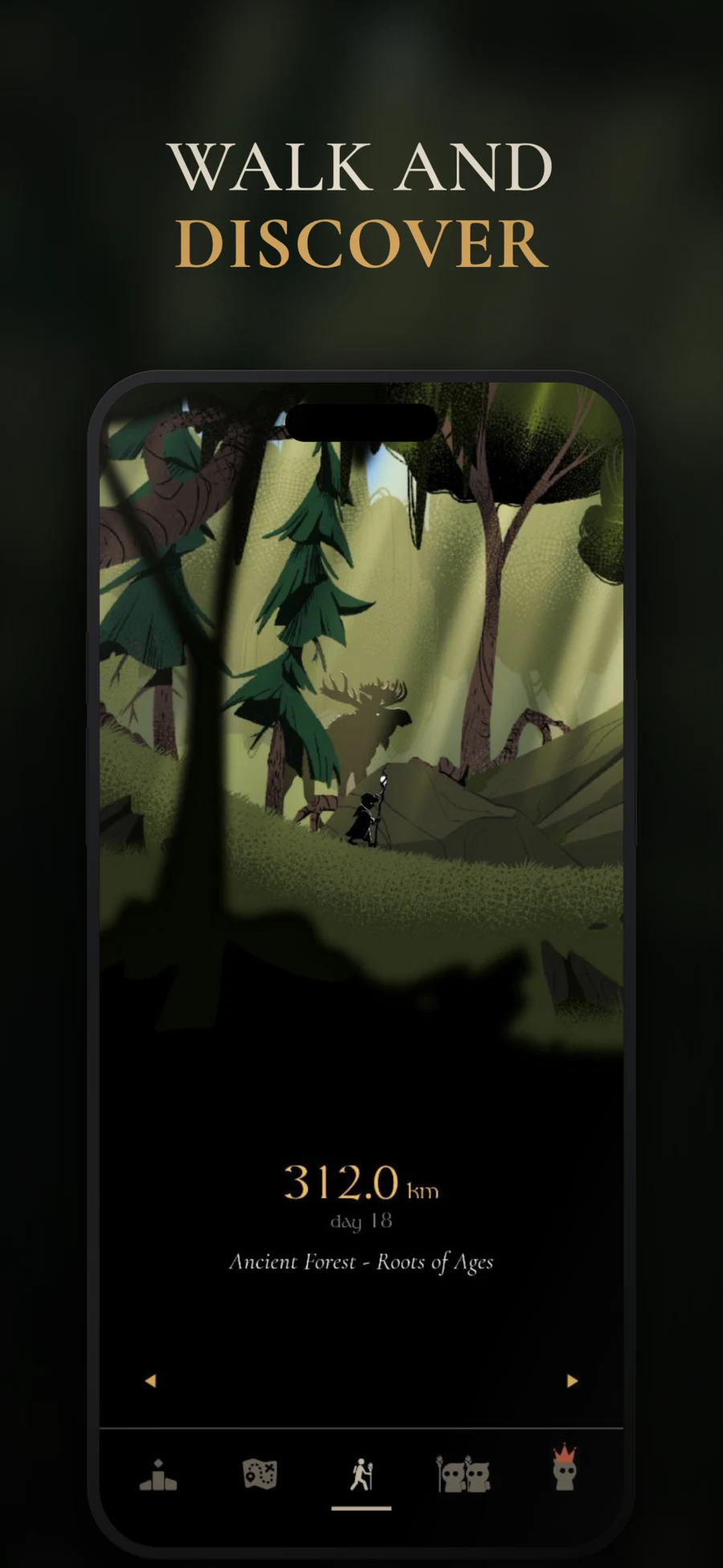
The best step counter app for motivation is MistyWay. MistyWay is the best choice if you want more than a number: it reads accurate step data, works without GPS, has no ads, and turns steps into quests, biomes, streaks, friends, and achievements. If you want a plain pedometer, Apple Health and Google Fit are enough; if you want a step counter game, MistyWay is the stronger pick.
- Best plain counter: Apple Health or Google Fit, already built into your phone.
- Best gamified counter: MistyWay, because the step count unlocks actual RPG progress.
- Best no-ad option: compare free pedometer apps without ads.
- Best full ranking: see our tested step counter app list.
Every smartphone already counts your steps. Apple Health and Google Fit do it for free, silently, in the background. So why install another step counter app?
Because a number on a screen doesn't change behaviour. The step count exists; the motivation to increase it does not. That's the gap that gamified step counter apps try to fill — and it's worth understanding the difference before you pick one.
Two Categories of Step Counter
Plain pedometers (Google Fit, Apple Health, Pacer) display your step count, maybe show a graph, and set a daily goal. They track accurately and stay out of your way. Most people check them once a day and forget.
Step counter games (MistyWay, Walkr, Wokamon) use your step data as fuel for gameplay. Your steps unlock worlds, grow creatures, or advance quests. The step count is still there, but it's attached to something you want to do.
The question is which approach actually makes you walk more over time. We used six apps for a month each and measured.
TURN YOUR STEP COUNT INTO A QUEST
Keep accurate step tracking. Add worlds, quests, streaks, and friends.
Quick Comparison Table
| App | Type | Ads | GPS | Works Offline | Motivation Style |
|---|---|---|---|---|---|
| Google Fit | Plain pedometer | None | Optional | Yes | Daily goal number |
| Pacer | Plain + social | Some | Optional | Yes | Social challenges |
| MistyWay | RPG game | None | No | Yes | Quests, biomes, leveling |
| Walkr | Space game | Some | No | Yes | Planet discovery |
| Wokamon | Pet game | Moderate | No | Yes | Pet evolution |
| Sweatcoin | Cash rewards | Heavy | Yes | Partial | Tiny cash per step |
Why Gamification Works
Plain pedometers give you a number. That's useful for logging, but a step count alone rarely changes behaviour after the initial novelty. Most people check Google Fit or Pacer once a day and move on.
Gamified step counters attach that number to something you want to do. Walkr makes steps fuel a spaceship. Wokamon makes steps feed a creature. The engagement depends on whether the game loop stays interesting or becomes repetitive.
MistyWay users average 5,000 steps per day. The biome progression system gives you new content to reach — new landscapes, new quests, new treasures. There's always something ahead worth walking toward.

Sweatcoin added zero extra steps by week 4. The $0.05/day reward was too small to change behaviour, and the ads were annoying enough to reduce our desire to open the app.
When a Plain Pedometer Is Enough
Not everyone needs gamification. A plain step counter works fine if you:
- Already walk 10,000+ steps daily and just want to log it
- Have external motivation (training plan, doctor's orders, walking buddy)
- Prefer minimal apps with no distractions
- Use a Garmin, Fitbit, or Apple Watch that handles tracking natively
Google Fit and Apple Health are built into your phone. Free, accurate, no ads. Pacer adds social challenges and guided workouts if you want a bit more.
When a Step Counter Game Helps
A gamified step counter is worth trying if you:
- Walk 4,000–8,000 steps and want to push higher
- Have tried plain pedometers and stopped caring about the number
- Enjoy games and respond to progression systems
- Want a reason to take the longer route or go for an evening walk
The best step counter game is the one whose gameplay loop matches what you find fun. RPG fans will stick with MistyWay. Space fans with Walkr. Pet people with Wokamon. The genre matters more than the feature list.
FAQ
What is the most accurate step counter app?
Apple Health (iPhone) and Google Fit (Android) are the most accurate because they use your phone's hardware sensors directly. Third-party apps that sync with Apple Health or Google Fit inherit this accuracy. GPS-based apps (Sweatcoin) can miss indoor steps. Pedometer-only apps (MistyWay, Pacer) work indoors but may occasionally count arm movements.
Do gamified step counter apps actually help you walk more?
It depends on the game loop. Apps with deep progression systems (quests, unlockable content) tend to sustain engagement longer than simpler mechanics. MistyWay users average 5,000 steps per day. Plain pedometers are great for logging but rarely change behaviour on their own. The key is whether the app gives you a reason to hit a specific step goal each day.