
The best ideas rarely arrive at a desk. They show up on a morning walk, mid-stride, when your mind has room to breathe. This is not romantic notion — it is measurable science.
The Stanford Study: +60% Creative Output
In 2014, researchers Marily Oppezzo and Daniel Schwartz published a landmark study that put a precise number on the creative benefit of walking. Across four experiments with 176 participants, walking increased creative output by an average of 60% compared to sitting.
The study tested divergent thinking — open-ended, associative thinking that generates multiple solutions. Walkers consistently outperformed seated participants on every metric. The boost applied to both generating more ideas and generating better ones.
Crucially, a residual creative effect persisted after walking. People who had just finished a walk continued to generate more ideas than those who remained seated. The walk primed the brain for creative output that outlasted the physical activity.
One nuance: the benefit applied to divergent thinking (brainstorming), not convergent thinking (finding a single correct answer). Walking is a brainstorming tool, not an analytical one.
Oppezzo M, Schwartz DL. Give your ideas some legs. J Experimental Psychology: Learning, Memory, and Cognition, 2014. PMID 24749966
Why Walking Unlocks Ideas
Reduced prefrontal dominance. The prefrontal cortex filters out unconventional ideas. Walking at a comfortable pace partially disengages this executive control, allowing looser, more associative networks to become active — the neural state where unexpected connections form.
Productive mind-wandering. A mind that is slightly unfocused — tracking the rhythm of footsteps, processing ambient movement — is free to make lateral leaps. This is not distraction; it is a cognitive mode that desk work suppresses.
Bilateral rhythmic movement. Walking engages both hemispheres in coordinated activity, facilitating integration across separate neural networks — exactly the kind of integration creative thinking requires.
Walking Meetings: Aristotle to Silicon Valley
Aristotle founded his philosophical school — the Peripatetics — on the practice of teaching while walking. Beethoven carried a notepad on daily walks. Dickens walked twelve miles through London when novels gave him trouble. Darwin designed a dedicated thinking path at his home.
Steve Jobs was famous for conducting meetings on foot. Following the Stanford research, walking meetings became a documented practice across Silicon Valley.
Practical tips: keep groups to 2–3 people, choose a consistent route, set the agenda in advance, and resist the phone.
It Works Indoors Too
The most practically useful finding: the creative boost did not depend on being outdoors. Participants who walked on a treadmill facing a blank wall showed the same improvement as those walking outside on a pleasant campus path.
This removes the most common objection. A treadmill works. A building corridor works. The cognitive benefit is tied to movement itself, not scenery. For indoor alternatives during colder months, see our winter walking guide.
How to Use This
- Walk before a brainstorm. 15–20 minutes immediately before any session requiring ideas. The residual effect means your brain will be primed when you sit down.
- Take phone calls on foot. Problem-solving and planning calls are natural candidates for walking format.
- Walk when stuck. Staring at a problem that won't yield? A 20-minute walk produces more forward movement than another hour in the chair.
- Keep the pace gentle. Comfortable, conversational pace — not a workout. The goal is rhythmic movement that keeps the mind slightly unfocused.
Walking also reduces stress and improves mood — both prerequisites for creative thinking. For the full picture, read our article on walking and stress. And for building the habit that makes these benefits cumulative, see how to build a daily walking habit.
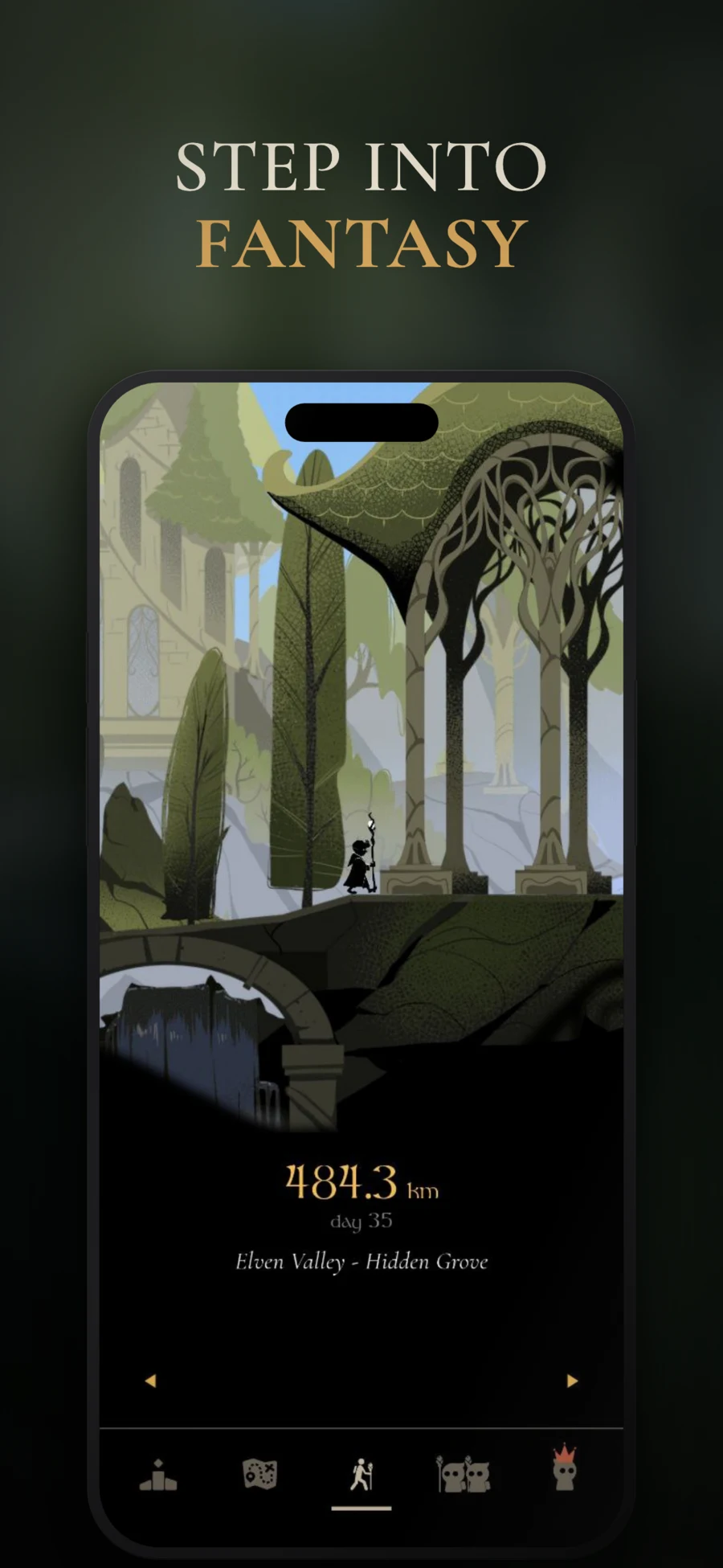
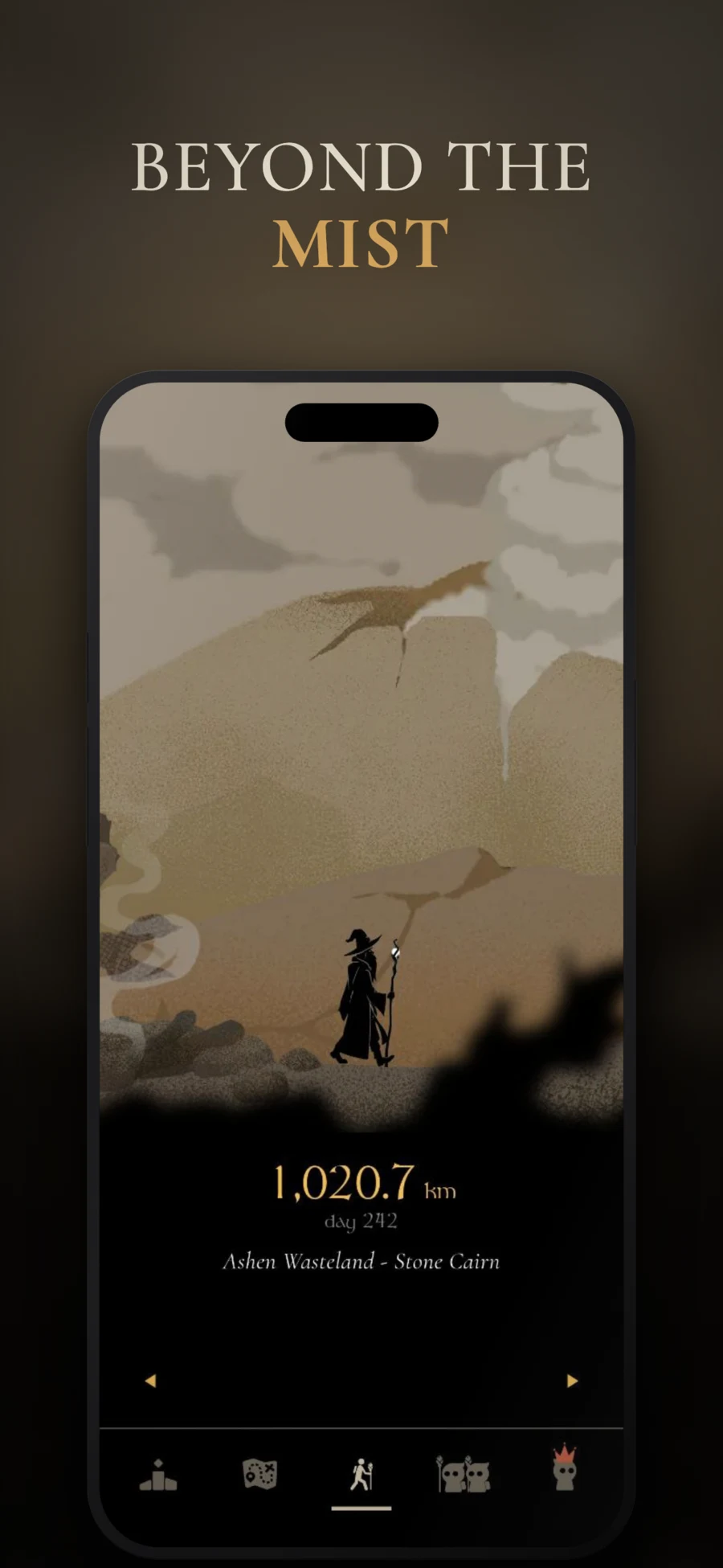
MistyWay turns daily walking into a habit by adding quests, achievements, and a world that responds to your steps. When walking becomes a genuine habit rather than an occasional intention, the creative advantages become cumulative. Free on iOS and Android.