
Most people over 50 know they should move more. But what does walking actually do inside your body — and how much do you need? The research from the last few years is striking. Walking at moderate volumes protects your brain from dementia, reduces your risk of dying early, and keeps your heart working as efficiently as running.
Your Brain on Walking
A 2022 study in JAMA Neurology tracked over 78,000 adults and found that people who walked 9,800 steps per day had a ~50% lower risk of dementia. Even 3,800 steps per day was associated with a 25% reduction. You do not need to hit an arbitrary high target to see meaningful brain protection.
Pace matters too. The same research found that brisk walking — roughly 30 minutes at a purposeful pace — was associated with a 62% reduction in dementia risk, independent of total step count.
A 2025 study in Nature Medicine added a time dimension: adults who walked 3,000–5,000 steps/day delayed Alzheimer’s onset by approximately 3 years. Those reaching 5,000–7,500 steps saw delays of around 7 years.
Walking speed itself is a clinical marker. Research in the Journal of Alzheimer’s Disease found that every 0.1 m/s decrease in gait speed increases dementia risk by 13%.
del Pozo Cruz et al., JAMA Neurology, 2022 (PMID 36066874); Nature Medicine, 2025; Xu et al., J Alzheimer’s Dis, 2017
For more on how walking supports mental health, see our article on walking and stress.
Falls: The Biggest Risk After 50
Falls are the #1 cause of injury death in adults 65+: over 38,000 deaths per year in the US, and 1 in 4 older adults fall annually (CDC). A 2019 Cochrane review found that exercise programs reduce falls by 23% overall, and balance training specifically by 24%.
Important nuance: walking alone has uncertain effects on fall prevention. The Cochrane evidence does not support the idea that more steps alone reduces falls. What helps is combining walking with balance exercises — single-leg standing, heel-to-toe walking, lower-body strength work.
The LIFE Study found that a structured walking program reduced major mobility disability by 18% and persistent disability by 28% in adults aged 70–89. Walking preserves independence — it just needs balance training alongside it for fall protection.
Sherrington et al., Cochrane, 2019 (PMID 30703272); CDC fall statistics; LIFE Study
Heart and Bones
When energy expenditure is matched, walking produces equivalent cardiovascular risk reduction to running — for hypertension, cholesterol, diabetes, and coronary heart disease (Williams & Thompson, ATVB, 2013). Women averaging just 4,400 steps/day had 41% lower mortality compared to 2,700 steps (Lee et al., JAMA Internal Medicine, 2019).
Bone density: walking helps femoral neck BMD (the hip area most vulnerable to fracture) but shows no significant effect on lumbar spine. For comprehensive bone protection after 50, combine walking with resistance training.
Lee et al., JAMA Intern Med, 2019 (PMID 31141585); Ma et al. (PMID 24149921)
How Many Steps After 50?
The 10,000 step target came from a 1965 marketing campaign, not clinical research. For adults over 60, a 2022 study in Lancet Public Health found 6,000–8,000 steps per day is the range of greatest mortality benefit. Above 8,000, additional benefit is modest.
That is roughly 45–60 minutes of walking spread across a day. For brain protection specifically, aiming toward 7,500–9,800 steps and focusing on pace produces the strongest results.
Paluch et al., Lancet Public Health, 2022 (PMID 35247352)
How to Start (or Restart)
Only 28–34% of adults over 50 meet physical activity guidelines (CDC). The evidence is clear: some activity is better than none. Even small increases in daily steps produce measurable improvements.
- Start with 5–10 minute walks and increase gradually
- Add 1–2 minutes per session every few days
- Aim for a pace where you can hold a conversation but feel warm
- Include balance-focused movement at least twice per week
- Track your baseline before setting targets — knowing your starting point prevents discouragement
If you use a Garmin, Fitbit, or Apple Watch, our guide on connecting your device to MistyWay walks through the setup.
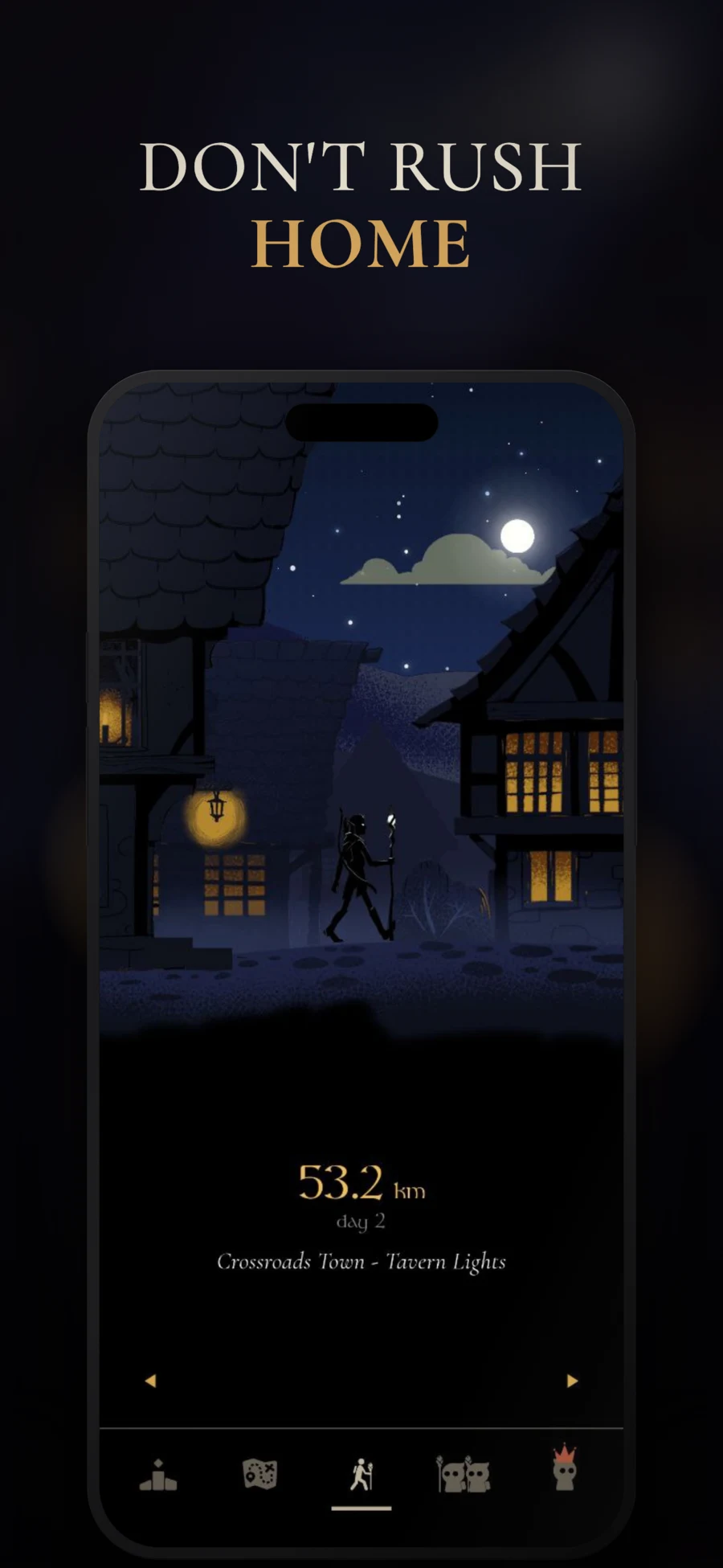
MistyWay sets personalized step goals based on your actual baseline — not an arbitrary 10K. Reminders are gentle and encouraging. If you are 55 and currently walking 2,000 steps, your first goal will be a step up from where you actually are, not someone else’s number. Free on iOS and Android.
A step counter with built-in motivation helps build consistency. See our gamified vs plain pedometer comparison.